
Articles
Poverty and Caste: Two Unseen Weights Crushing Young Lives
Opinion | Articles | John Dayal | 19-May-2026
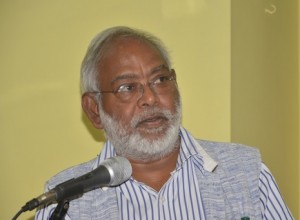
Rohith Vemula was a 26-year-old Dalit PhD scholar at the University of Hyderabad whose suicide on January 17, 2016, sparked national protests against caste discrimination in Indian academia amidst demands for the resignation of the then Human Resources minister Smriti Irani. In May 2026, the National Crime Records Bureau (NCRB) released its latest Accidental Deaths & Suicides in India report, showing student suicides reached a staggering 14,488 in 2024 – a 4.3% increase from 13,892 the previous year and the highest in at least a decade.
While overall suicides in the country dipped marginally by 0.4% to 170,746, the student segment surged faster, accounting for 8.5% of all cases, and over the decade from 2015 to 2024, more than 115,850 students have died by suicide. Maharashtra, Uttar Pradesh, Madhya Pradesh, and Tamil Nadu lead the grim tally, with males (7,669) slightly outnumbering females (6,819), each number a young life extinguished – dreams deferred, families shattered, and a talent gone.
In an X post, writer Sushant Singh captured the deeper rot, writing that “The figure includes those dying due to caste oppression, religious discrimination and sexual harassment, all bracketed under a single heading of students dying by suicide.” Official data, constrained by its methodology, often lumps complex social realities into broad categories like “family problems” (33.5% of suicides) or “illness” (17.9%) with exam failure accounting for just 1.2%, and unemployment a mere 1.5%. This flattening of narratives obscures the intersecting crises of caste oppression, grinding poverty, relentless societal and parental pressure, and a job market that offers no mercy.
Student suicides have climbed 15.7% since 2020 and a shocking 62.2% since 2015. In 2022, the figure stood at 13,044; by 2023, 13,892; now 14,488. Southern and central states bear the brunt, reflecting intense coaching cultures in places like Kota in Rajasthan or the competitive churn of engineering and medical entrance tests, but the crisis is nationwide, touching rural government schools and elite urban campuses alike.
Experts have highlighted untreated depression, anxiety, academic pressure, parental expectations, career worries, and social media as immediate triggers, buttery few of them like to talk about caste oppression, poverty, lack of jobs, and societal pressure which together create a lethal combination. Caste oppression too is a real elephant in the room with Dalit and Adivasi students in premier institutions, including IITs and medical colleges facing discrimination, isolation, and humiliation.
Cases like Rohith Vemula, Payal Tadvi, Darshan Solanki and many others show how caste-based harassment pushes students to the edge. Data presented to Parliament revealed that a large percentage of suicides in central universities involve students from lower castes and tribal communities. NCRB categories hide this reality. Poverty is equally inseparable as most victims come from economically weak backgrounds, and are first-generation learners who carry the burden of entire families’ hopes and debts which will brook no failure.
Obviously, the lack of jobs makes everything worse as youth unemployment remains high, degrees do not guarantee employment, and a deep hopelessness inevitably overwhelms young men and women who were told education was the only way out. For poor and middle class alike, parental pressure is crushing and love seems to turn into constant monitoring and fear of failure. None of these seems to have priced the national conscience and certainly has not been translated into policy or remedial measures whose need stares us in the face.
NCRB data remains opaque, occupationally aggregated but silent on caste, religion, family income, or intersectional factors, each a critical driver. Between 2018 and 2023, 98 students in central universities, IITs, NITs, IIMs, and IISERs died by suicide—disproportionately from Scheduled Caste (SC), Scheduled Tribe (ST), and Other Backward Classes (OBC) backgrounds. Caste-based discrimination complaints in these institutions rose 118.4?tween 2019–2024, with the UGC recording 1,160 grievances from Equal Opportunity and SC/ST Cells.
Yet official suicide statistics list only “academic failure,” “family problems,” or “unemployment” without linking them to discrimination or poverty. Independent studies and SC observations confirm that Dalit and Adivasi students face exclusion, micro-aggressions, and epistemic violence that compound academic stress into despair. Economic vulnerability is equally invisible, and scholarship delays alone push students into debt traps and hostel eviction threats.
The Ministry of Home Affairs must amend NCRB reporting formats by 2027 to mandate caste (SC/ST/OBC/General), annual family income brackets, and migration status for every suicide case involving students. Similarly, the National Statistical Office and Ministry of Education need to launch an annual “Student Mental Health and Equity Index” integrating NCRB, UGC, AICTE, and state education department data. Strong anti-discrimination mechanisms are needed in every educational institution as Rohith Vemula (2016), Darshan Solanki (IIT Bombay, 2023), and multiple IIT Kharagpur cases in 2025–2026 illustrate how institutional bias—hostel segregation, faculty bias, peer ostracism—creates toxic environments.
The Supreme Court’s January 2025 and 2026 orders directed UGC to notify the Promotion of Equity in Higher Educational Institutions Regulations, 2026, mandating zero-tolerance policies, independent Equal Opportunity Cells with student representation, mandatory annual caste-sensitivity audits, and swift penalties including faculty suspension. Compliance remains patchy with only 65% of surveyed institutions even have functional grievance cells, even as the movement gathers momentum for a robust mechanism to dismantle the “institutional murder” narrative and restore dignity.
The July 25, 2025 Supreme Court judgment in Sukdeb Saha v. State of Andhra Pradesh issued 15 binding nationwide guidelines that every institution with 100 or more students must appoint at least one qualified counsellor/psychologist/social worker trained in child/adolescent mental health. Optimal ratio for a counsellor for every 500 students or better during exams, 24/7 helplines, staff sensitisation, and referral protocols to district mental health centres are now a law.
But across India, 73% of institutions still lack full-time mental health services, and school counsellor density remains abysmal, often as low as a counsellor for ever 5,000 students, or even worse. Central and state governments have to fund 50,000 additional trained professionals by 2028 in a National Counsellor Cadre under the National Mental Health Programme, trained in trauma-informed care, suicide risk assessment, and cultural competency.
Financial stress ranks among top triggers alongside academics and though Supreme Court directions are crystal-clear: clear all scholarship backlogs within four months delays persist, especially for SC/ST/OBC/EWS schemes, pushing first-generation learners into despair. As the new academic year begins, government at the Centre and in the states, as well as academic institutions, including coaching centres such as the ones in Kota must take urgent remedial steps. Lives depend on it.
(The writer is a Senior Journalist and right Activist. Views expressed are personal)