
Articles
The origin of the Catholic faith among the Rengma Nagas
Opinion | Articles | Benjamin Chang | 30-Jul-2026
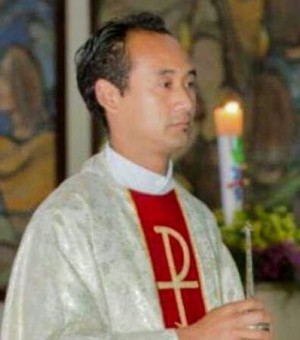
Until 1967, the Catholic Church remained entirely unknown to the Rengma people of Nagaland. The seeds of the faith were first planted through the dedicated efforts of a devout layman, the late Mr. Pralie Paulus Angami of Kohima Village. In 1966, Mr. Pralie Paulus Angami was posted to Tseminyu as an Agricultural Instructor. Driven by a deep conviction and inspired by the Holy Spirit, he felt a strong calling to establish a Catholic presence throughout the Rengma region. He began reaching out to local residents, visiting various households and sharing the teachings and message of the Catholic Church.
Mr. Pralie Paulus Angami’s initial efforts bore fruit in 1967, when he successfully established the very first Catholic community in the region at Tesophenyu Village. This historic foundation was made possible through the close relationships and active cooperation of influential local leaders, including the late Mr. Lotsuo (DB), the late Mr. Nphuseng (DB), the late Mr. Mezechü (GB), and the late Mr. Nighewa (DB). Their customary standing as Dobashis (DB) and Gaon Buras (GB) helped foster trust and community support for the nascent congregation.
As Sunday services began in Tesophenyu Village, a small group of individuals from Tseminyu Village routinely accompanied Mr. Pralie Paulus Angami on his journeys to attend worship. This regular fellowship inspired the group to embrace Catholicism, forming the foundational core of believers in Tseminyu Village. Among these early pioneers were the late Mr. Khikebu Khing Alphonsa, the late Mr. Kejeshe Isaak Kent, and Mr. Ngabu Albert Khing. Mr. Ngabu Khing emerged as an essential leader during this formative period, serving as an interpreter to bridge linguistic barriers and communicate the faith effectively to the local community.
Through these combined efforts, Mr. Pralie Paulus Angami realized his vision of expanding the Church beyond Tesophenyu. A distinct Catholic community soon took root in Tseminyu Village, initially growing to include 47 faithful individuals who embraced the Catholic faith, marking a crucial chapter in the history of the Rengma Church. (The details about ST. PETER’S CHURCH TESOPHENYU will be given in the next chapter)
Pioneer Faith: The Growth of the Tseminyu Catholic Community
The milestone for the Tseminyu Catholic community came when Mr. Ngabu Khing traveled to Christ King Parish Church in Kohima, where he was baptized on July 31, 1968. Upon his baptism, he took the Christian name Albert, becoming the very first Catholic from Tseminyu. Demonstrating an extraordinary commitment to his newfound faith, Mr. Albert Khing left for Dibrugarh the very next day to undergo formal catechist training, resigning from his government position as a primary school teacher to dedicate his life entirely to the service of the Church.
In his absence, the late Mr. Kegwaseng Albert Nsü stepped forward to lead the fledgling congregation. He took on the vital role of translating religious teachings and guiding the small group of believers through their daily spiritual life. As word of the Catholic Faith spread, the number of catechumens grew steadily. To accommodate their growing numbers, the members pooled their modest resources, contributing five rupees each. Through their shared labour, they constructed a small bamboo and thatch chapel measuring roughly 10 by 15 feet. This humble place of worship was officially blessed in September 1968 by Rev. Fr. Bernick, SDB.
The community’s spiritual foundation deepened on December 1, 1968, when fifteen more individuals received the Sacrament of Baptism. Together with Mr. Ngabu Albert Khing, these new converts formed the foundational core of the Tseminyu Catholic Church. Upon completing his formation in 1971, Mr. Ngabu Albert Khing returned to serve as the region's first local catechist.
The path for these early believers was far from easy. They faced substantial hardship, social opposition, and outright threats from various quarters within the region. Yet, despite these intense pressures, the seeds of faith sown during those early years did not wither. Instead, sustained by deep conviction and perseverance, the community took firm root, growing into a vibrant and flourishing church that continues to bear fruit for the glory of God.
Labourers in the Vineyard: The Establishment of Tseminyu Parish
In the initial years of the local mission, God sent Rev. Fr. Bernick, SDB, then the Parish Priest of Christ King the Church, Kohima to Tseminyu to preach the Good News. During this early period, the region lacked a resident priest and remained under the spiritual care and administration of Christ the King Parish in Kohima. Driven by a deep desire for continuous pastoral guidance, the local Catholic community took the initiative in 1975 to construct a small residence for clergy, earnestly inviting a priest to live among them and shepherd their growing flock.
In response to their invitation, Rev. Fr. P. D. George, SDB arrived in Tseminyu on October 18th 1975, becoming the first priest to take up residence in the area and establishing himself as one of the key pioneers of the Rengma mission. Recognizing the need for proper infrastructure to support spiritual life and community growth, Rev. Fr. George SDB called upon the faithful to build a permanent parish house and a dedicated church building. The community responded with generous cooperation, offering their full labour and support to realize this shared vision.
Although Rev. Fr. P. D. George SDB faced numerous hardships, financial strains, and administrative challenges, his steadfast courage and complete surrender to God never wavered. His dedication inspired many more local residents to embrace the Catholic faith. Witnessing the Church take firm and steady root, the community grew rapidly in numbers and spirit.
Recognizing this substantial growth, Rt. Rev. Bishop Abraham Alangimattathil, the Bishop of Kohima, officially installed Rev. Fr. P. D. George SDB as the very first Parish Priest of the Tseminyu Catholic Community on August 1, 1976.
The mission expanded further on December 18, 1976, with the arrival of the Missionary Sisters of Mary Help of Christians (MSMHC). Sisters Sabina, S. Teresa, and Flora. To support their religious life and educational ministry, a convent was constructed for the sisters, which was solemnly blessed by Bishop Abraham Alangimattathil on August 15, 1977, marking another major milestone in the spiritual maturity of the Tseminyu parish.
Generous Hearts: Expanding the Sacred Ground
As the number of faithful grew rapidly in Tseminyu, the original chapel quickly became too small, creating an urgent need for a larger church building. The community began searching for a suitable site, but parts of the ideal plot belonged to non-Catholic community members. When approached, these neighbours responded with extraordinary goodwill, generously donating their land for the construction of the church. Among those whose generous hearts made this possible were the late Mr. Ngabu Tep, father of former touring catechist Mr. Peter Tep, and the late Mr. Khasü Kent, son of Mr. Logubu Kent. Through their selfless contributions, a magnificent new church was erected, offering shelter to the community and bringing abundant spiritual blessings.
Although the church was built, the surrounding campus remained constrained, offering little space for community gatherings and parish activities. To expand the church grounds, the late Mr. Abraham Shwenga Khing facilitated a critical land exchange with the late Mr. Gwasenlo Tsela before selling the plot to the church community for a nominal sum of five thousand rupees. Additional contiguous lands were donated by other benefactor figures, including Mr. Nyenlo James Kent, who serves as a parish catechist, and Mr. Ronga Khing, a former pastor of the Tseminyu Village Baptist Church, a beautiful testament to ecumenical goodwill in the region.
To host visiting clergy and manage parish administration, the community also planned a guest house and office complex. The initial plot for the guest house had been swapped by the late Mr. Ngabu Tep with the late Mr. Kegwalo Khing (son of Mr. Rushvulo Khing). Later, demonstrating the same spirit of stewardship as their father, the children of the late Mr. Kegwalo Khing freely donated the property back to the church. The Catholic community remains ever grateful for these acts of generosity, treasuring the legacy of these donors as foundational to their parish identity.
Through relentless hard work and collective labour, the faithful completed the entire church complex within a few short years. On November 4, 1979, Rt. Rev. Bishop Abraham Alangimattathil, the Bishop of Kohima, solemnly blessed and inaugurated the new church building. To mark this momentous day in the history of the Rengma Catholic mission, a new parish school building and a medical dispensary were also blessed and inaugurated alongside the church, cementing the parish's commitment to both spiritual care and social welfare.
The Handover and Silver Jubilee:
For seventeen years, the Salesian fathers worked with relentless labour and missionary zeal to lay a solid foundation for the Tseminyu mission. Under their dedicated care, the parish steadily grew from a small group of early believers into a mature, self-sustaining faith community. Recognizing this stability, the Salesians formally handed over the administration of the parish to the Diocese of Kohima in 1992.
With this transition came a new era of diocesan leadership. Rev. Fr. Carolus Neisalhou Kuotsu was installed as the first Diocesan Parish Priest as well as the Principal of the parish school. Assisting him in this new chapter were Rev. Deacon Pappusamy, who was appointed for his diaconate ministry, and Bro. Keduolhou George Angami, who joined the parish to complete his regency.
Shortly after the transition, the parish reached a major milestone: celebrating 25 years since the Catholic faith first took root among the Rengma people. On December 12, 1993, the faithful gathered to celebrate their Silver Jubilee, marking a quarter-century of spiritual growth that had bloomed gloriously from humble beginnings. Rt. Rev. Bishop Abraham Alangimattathil, the Bishop of Kohima, presided as the Main Celebrant for the historic occasion.
The Silver Jubilee brought a deep sense of renewal and manifold blessings to both the Catholic community and the broader population of Tseminyu. Local villagers experienced an unusually bountiful harvest and abundant crop yield that year, which many recognized as a tangible sign of divine favour accompanying the Jubilee. Furthermore, this period marked a notable rise in community members securing government employment, a development seen by the faithful as further evidence of God’s grace and guidance over their journey.
(The writer chronicled this piece based on the accounts of Mr. Peter Yhunkhemvü Tep)