
Editorial
The ‘Yes Men’ in the Lok Bhavans of Indian states
Opinion | Editorial | John S. Shilshi | 20-Oct-2026
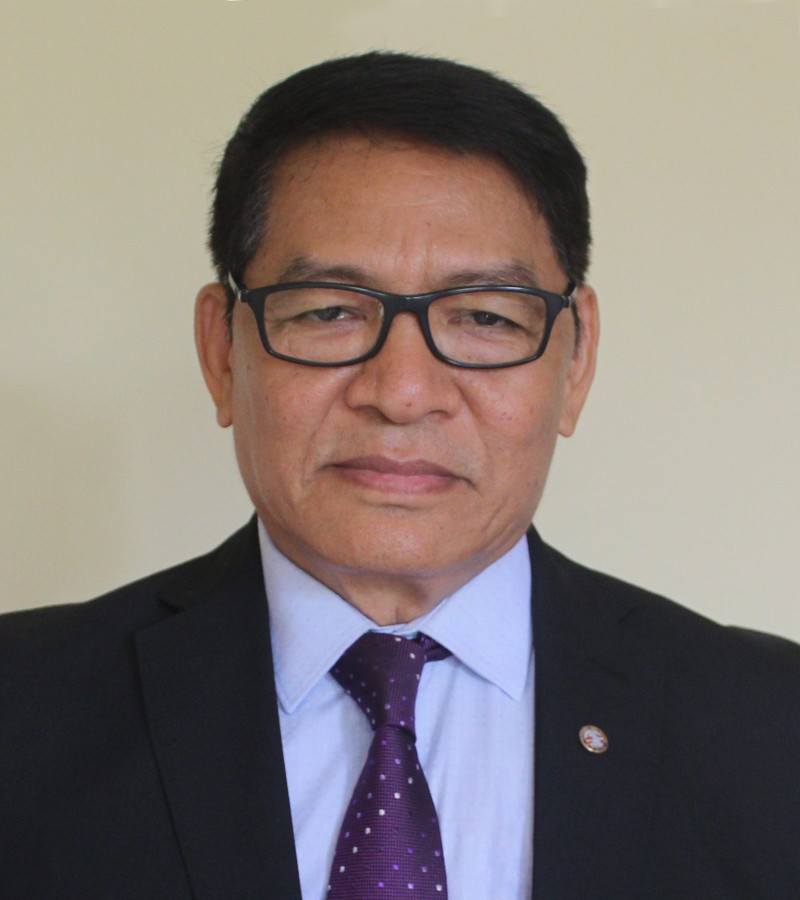
In today’s India, gubernatorial positions in the federal units are known more for controversies than otherwise. This is because the position of governors, which is intended to uphold the federal character of this country, often referred to as the largest democracy in the world, is exploited by the ruling parties to advance their interests during government formations, especially in cases where election results are closely contested. The Congress party engaged in this practice during the UPA regime, and the BJP, which leads the NDA government at the center, is currently doing the same. Barring in very few cases, the selection of candidates to occupy the Raj Bhavans, of late renamed as ‘Lok Bhavans,' had never been free from controversies.
Apart from routine objections from opposition political parties, appointments to gubernatorial positions have rarely faced significant opposition, which suggests a general acceptance and understanding that the decision on who occupies these ceremonial roles rests solely with the party in power. The noise, therefore, was merely symbolic and lacked the conviction needed to genuinely reform the system. This conclusion is evident in the recommendations of the Sarkaria Commission (1988) and the Punchhi Commission (2010), which stipulated that governors should be chosen from detached outsiders with no political party affiliations. But even such recommendations from committees, appointed by the government made no difference. The governor's seats are manipulated to fulfill two objectives: one, to ease out some of their politicians from active politics, and two, to manipulate certain situations in favour of the party when needed. Therefore, we often see a game musical chair whenever significant political manoeuvring is on the card.
As if these routine abuses of the seats of the chief executives of the States are not sufficient, we now find a new low of disrespect for the institution, a constitutional body once respected and held in high esteem, by inducting Dushyant Kumar Gautam, a person under investigation for alleged involvement in a murder case, as the Governor of Sikkim. The public in Sikkim raised strong objections as soon as President Droupadi Murmu's appointment became public on 12 October 2026. The Sikkim public not only openly expressed solidarity with the parents of Ankita Bhandari, who first went missing and was later found murdered, but also described the appointment of Gautam as a living example of treating the state as a dumping ground for individuals with dubious backgrounds. It, however, made no difference. The ‘Yes man’ was firmly seated on the ceremonial chair on October 19, after a glittering swearing-in function.
To revisit the incident briefly, in September 2022, a 19-year-old woman, Ankita Bhandari, who was working as a receptionist in a resort near Rishikesh, went missing, and her dead body was found after six days in the Chilla canal near Rishikesh in Uttarakhand. The police investigated the case, leading to the arrests of Pulkit Arya, resort manager Saurabh Bhaskar and assistant manager Ankit Gupta. A Special Investigation Team (SIT), headed by a woman IPS officer, was formed to investigate further. In that, allegations of Ankita being pressured to provide special services to an influential guest at the resort came to light, which was popularly known as the “VIP angle." The issue further escalated in late 2025 and early 2026 when Urmila Sanawar, who claims to be associated with former BJP MLA Suresh Rathore, circulated purported audio and video recordings wherein it was alleged that the person referred to as “Gattu” was a senior BJP leader; thus, pointing the needle of suspicion towards Dushyant Kumar Gautam.
Following this new angle of involvement, Ankita's parents sought further investigation into whether an influential person was involved in the murder and demanded a CBI probe. With public pressure mounting, the Uttarakhand government recommended a CBI inquiry on 9 January 2026. Since then, the agency has been investigating, and it is yet to come clean on Dushyant’s involvement. In the meantime, taking refuge in the proverbial ‘a person is innocent unless proven guilty,' his party appointed him as a governor even as the case against him is sub-judice. This, one may say, is yet another example of the system not respecting the sentiments of the public. While the choice of the candidate is indisputably the prerogative of the government, one feels the appointment could have at least waited until the CBI investigation is over and the name of Dushyant Kumar Gautam is cleared. Is the government already aware of the outcome of the case even before the investigation is completed?
Under the Indian Constitution, the governors are described as the chief executives of the state, therefore placed at the pedestal in protocol. The Supreme Court, in Hargovind v/s Raghukul 1979, held that “the office of the governor of a state is not an employment under the central government. It is an independent constitutional office that is not under the control or a subordinate to the central government. " Article 158 says the governor can't be a member of either House of Parliament or any state's Legislature in the first schedule. Thus, the need for neutrality is well established. But since the 1970s, the majority of the Lok Bhavans have become other wings of the ruling dispensation. Above all, the consistent decline in morality of people holding these offices is most deplorable.