
Articles
The Need for Lay Solidarity with the Synodal Church can’t be more pressing than now
Opinion | Articles | John S. Shilshi | 21-Sep-2026
In the early Church, the terms "royal priesthood," "a Holy nation," and "God's own people" were used to describe the collective Christian faithful. This position changed in the early Middle Ages, where a dualistic concept of membership in the Church was introduced into the theology and ecclesiastical structures. The ‘laos’ of God became laity under the clergy.
This shift in position was succinctly elaborated by Archbishop Antony Anandarayar in one of his articles in the Canon Law Society of India. He wrote, “The biblical and the theological understanding of the laity as a chosen people with equal dignity and co-responsibility gave way to a social and feudal understanding of the laity as a social category. They were considered a dependent and educationally ignorant section of the society. The ecclesiastical legislations, administrative, sacramental, juridical, and penal systems further affected the laity adversely. They soon came to be identified as the mass of believers who were not among the sacred elite…… The laity became the object of pastoral care and not the agents of missionary proclamations."
It must, however, be accepted that the shift in notion as above, after all, was part and parcel of the evolving history of the Church. But, at the same time, it must be admitted that this part of the history had adversely impacted on the growth of the universal church. Besides the resentments, it had even led to disintegration within, both in spiritual and secular parlances. Tension brewed, as more and more questions were asked.
In due course, the Church realised the need for a cooperative participation of the body of Christ. Lay apostolate, therefore, became codified in various Church documents. For example, the Code of Canon Law emphasised that “Christ faithful are to join especially those associations which have been established, praised or recommended by the ecclesiastical authority” (Canon code 298: §2). Similarly, the Vatican II document inserted several unambiguous clauses to define lay apostolate as a divine call through baptism, secular in character, and indispensable. The document underlines three important key objectives, viz. evangelisation, temporal order, and cooperation – thus mandating the lay to preach, encourage justice and charity among men, and ensure cooperation with the hierarchy. In other words, laypeople too are mandated to preach the Gospel, strive to improve human lives in families, societies, and workplaces by encouraging and promoting justice and charity, while they are expected to work in tandem with the church hierarchy.
In reality, however, these mandates to the laity, including those outlined in various encyclicals of the Popes from time to time, are somewhat neglected by the Twin-pillars (laity and clergy). While the laypeople, unfortunately, misunderstood their primary role as that of keeping a watch over the perceived wrongdoings of the clergy, the latter remains consistently apprehensive of interference and, therefore, often refrain from encouraging a strong and functioning lay bodies. No matter how much the church may try to downplay it, this mutual suspicion has caused much divisions within in many places. In the present-day India, where one sees ominous signs of the community and the church being targeted, a course correction is urgently called for.
As we examine how the laity which constitute 90% of the Body of Christ could contribute to the good of the church, it may be desirable to understand how the laity across India thinks. Though with minor variations, about 60% of lay Catholics spoken to would welcome the idea of having a strong lay organisation because they feel that it would help in checking clergy domination in running the affairs of the church. About 50% think they have no role to play, while 30% are not at all sensitive to problems facing the church, and very conveniently take for granted that standing up for the church is the responsibility of the hierarchy.
There is also a worrying sign that one sees while talking to lay Catholics - majority are not at all aware of the rapid socio-political churning that is taking place in the last decade or more, therefore, had no idea about the likely implications of these changes for Christians, and also the Catholic Church. In India’s North East region where the Catechists play a very important role for evangelization and spiritual engagements of the faithful, the Catechists are as ignorant on this as the people they extend pastoral leadership to.
On the organisation front, the All India Catholic Union (AICU), the apex lay body is the oldest lay organisation in Asia. It commands considerable respect within and outside the Catholic fold. However, it has not evolved sufficiently to meet changing times as it suffers from certain structural inconsistencies. For example, an organization of such standing elects only two officials - the National President, and the National Vice President - while the president nominates all the remaining functionaries, including the Chief Executive – the Secretary General, and the custodian of its treasury – the Hony Treasurer. This arrangement limits meaningful democratic discourses and suggestions, as most nominated officials feel their views might be construed as a criticism. Thus, a culture of maintaining silence loom large and discourages democratic temperament.
Secondly, inadequate decentralisation leads to lack of understanding regional compulsions and unique problems of some of the regions, notable among them being the North East India and a few peripheral states and regions. For example, in the North East region, the Catholic church and Christians in general face different kinds of problems which are different from the mainland. There it is not just about countering physical attacks and criminalisation of worships etc., but ethnic and community driven issues that needs delicate balancing while handling them. The silence of the apex lay body to speak up against some of the issues due to lack of deeper understanding despite all the good intentions, are often perceived as neglecting the region. Likewise, in Jammu & Kashmir and Andaman and Nicobar Islands, the kind of issues bothering Christian communities are different from the rest, therefore, requires different way of handling, which are often found wanting.
A closer look at the status of lay bodies in different states presents two contrasting situations. There are few which are performing exceeding well, while many dioceses don’t even have lay organisations worth the name. It is a classic case of system failure and individual brilliance because it is the performing few that cover up the shortcomings of failing dioceses. One area that needs urgent attention even for organisations that are performing well, is the absence of regional networks where Catholic organisations could speak in one voice against injustices in other states and for other Christian denominations. Can this lackadaisical attitude be allowed to continue? Not anymore for reasons below.
This country has a robust constitutional safeguard for every citizen irrespective of caste, community, or religious affiliations. However, ever since the Bhartiya Janata Party came to power in 2014, these constitutional rights have been consistently trampled selectively. According to a very reliable data compiled by the United Christian Forum, number of attacks on Christians which stood at 147 in 2014 multiplied to 837 in 2025. Currently twelve Indian states have their Anti-Conversion laws, while Maharashtra, Goa, and West Bengal, are inching closer to having their respective laws. Policies introduced thus far, such as the UCC, NEP, SIR, issues relating to Dalit Christians, attempt to delist tribal Christians from the national list of tribals, and the proposed amendment to the FCRA Act, are clearly directed towards the Christian community. The threat, therefore, is real, and the need for a functioning lay Catholic bodies standing by the Synodal church is urgently called for.
It is, therefore, time for lay Catholics to move from optics to action, from discussion to actionable strategies. It is also time for every diocese in India to form credible lay bodies and train its leaders to be alive to situations. Sensitization of lay faithful on policies and legislations likely to impact Christian and church interests, is now a crying need. There is a need to network Catholic synergy nationally and at regional levels with ecclesiastical cooperation. This will enable the church to speak out in one voice against discriminations and injustices. Most importantly, the secular bodies must be willing to shoulder greater responsibilities when it comes to defending the church.
Lay apostolate is a mission, not a mere social service. It is a cooperative venture and not a platform of confrontation, where coordination must prevail over game of one upmanship. It should be a platform where leadership is assumed silently through constructive works instead of seeking recognition from the clergy as a matter of right. Every contribution must come as a process of giving back to the church in return for what the Synodal church had given to every lay member from formation to maturity, and to prosperity – contributions not necessarily measured in terms of monetary values, but through advice, advocacy, counselling, and devoting one’s time. Disagreements and differences with individual members of the clergy must not prevent solemn service to the Mother Church.
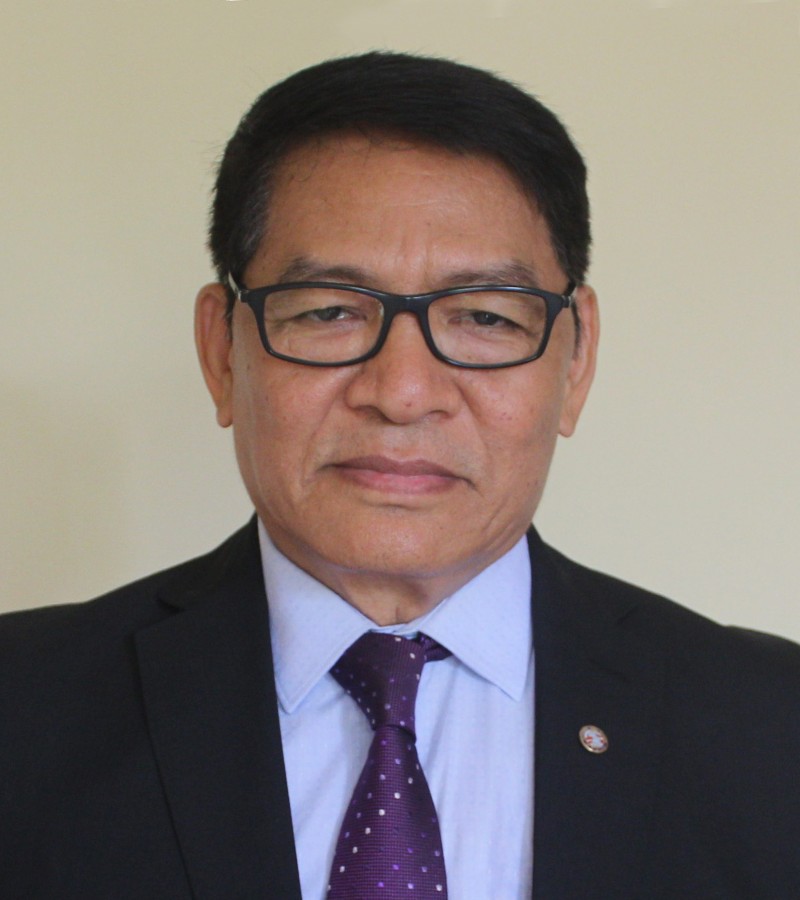
(The writer is a retired IPS officer, author, and a founding member of the North East Catholic Research Forum. He can be reached @ johnshilshi@gmail.com. Views expressed are personal)