
Articles
The Society of St. Pius X: From Archbishop Lefebvre's Vision to Its Current Canonical Status [A continuation…]
Opinion | Articles | Thou Ngaoni Paul | 19-Aug-2026
3. Gravity of Schism in Catholic Teaching
3.1 Hierarchical Communion
From the perspective of Catholic theology and canon law, Archbishop Marcel Lefebvre’s fundamental error was not simply that he questioned aspects of the Second Vatican Council, but that he chose disobedience to the Church’s legitimate authority. While theological concerns can be discussed within the Church, no bishop has the authority to place himself above the Pope and the universal Magisterium. Lefebvre's actions ultimately transformed a theological debate into an ecclesiological crisis.
The Catholic Church teaches that Christ entrusted the governance of His Church to the Apostles with Peter as their head (Mt 16:18-19; Lk 22:32; Jn 21:15-17). The Pope, as the successor of St. Peter, possesses supreme, full, immediate, and universal ordinary power (Can 331) in the Church. Bishops govern their dioceses only in hierarchical communion with the Roman Pontiff. This visible unity is not merely an administrative arrangement but belongs to the very constitution of the Church established by Christ.
Lefebvre sincerely believed that certain teachings and reforms associated with Vatican II endangered the Catholic faith. However, Catholic doctrine does not permit an individual bishop even one convinced he is defending Tradition to decide unilaterally that the Church’s supreme authority has fallen into error and may therefore be resisted in matters touching ecclesial governance. Authentic Tradition is safeguarded by the living Magisterium, not by private judgment.
As noted earlier, the defining moment came in 1988, when Lefebvre on 30 June consecrated four bishops without the required papal mandate despite repeated warnings and after extensive negotiations with the Holy See. By proceeding with the consecrations against the Pope’s explicit prohibition, Lefebvre chose a path of separation from ecclesial authority. Pope John Paul II described the episcopal consecrations as “a schismatic act” in his apostolic letter Ecclesia Dei (1988). [22] The issue was not simply disobedience to a disciplinary law but a rejection of the Pope's authority in a matter essential to the governance of the Church. Episcopal consecration without papal approval[23] directly challenges the Church’s hierarchical constitution because bishops are successors of the Apostles who exercise their ministry only in communion with the successor of Peter.
The period from 1991 to 2009 was marked by continued separation alongside renewed efforts at dialogue between the Catholic Church and the Society of St. Pius X (SSPX). In 1991, Archbishop Marcel Lefebvre died while still under the penalty of excommunication, having never publicly repented of or withdrawn the illicit episcopal consecrations that had led to the sanction in 1988. Despite the ongoing rupture, the Holy See consistently expressed its desire for reconciliation through dialogue. A significant moment came in 2000, when the SSPX organised a large pilgrimage to Rome during the Jubilee Year of Mercy, opening the way for renewed contacts. Pope Benedict XVI further encouraged reconciliation by issuing Summorum Pontificum (2007)[24], which broadened access to the traditional Latin Mass, and in 2009 he lifted the excommunications of the four surviving SSPX bishops as a gesture to foster continued dialogue.
The years 2012-2021 were characterised by significant but ultimately unsuccessful efforts to achieve reconciliation between the Holy See and the Society of St. Pius X. In 2012, the Vatican offered the SSPX a canonical structure that would have regularised its status within the Church, but the Society declined the proposal.[25] Despite this setback, the popes continued to seek the return of the Society to full ecclesial communion.[26] Pope Francis granted SSPX priests limited faculties to validly and licitly celebrate the sacraments of Penance (2015) and, under certain conditions, Marriage (2017), demonstrating a pastoral desire to heal the division. Nevertheless, the SSPX maintained its independent course. In 2021, Pope Francis issued Traditionis Custodes[27], restricting the celebration of the pre-conciliar Latin Mass while reaffirming the Church’s commitment to unity under its legitimate authority.
3.2 What is Schism?
Canon law defines schism as “the refusal of submission to the Supreme Pontiff or of communion with the members of the Church subject to him” (Can 751). Thus, schism is more than disagreement; it is a rupture of ecclesial communion. A Catholic may respectfully question prudential decisions or seek clarification on theological matters, but deliberately refusing submission to the Pope in matters of governance places that person outside the full visible unity of the Church.
The Church has always regarded schism as a grave sin because it wounds the Body of Christ. St. Paul pleaded with Christians: “that there be no divisions among you” (1 Cor 1:10). Christ Himself prayed on the night before His Passion, “that they may all be one” (Jn 17:21). Unity is therefore not optional but belongs to the Church’s essential nature.
This is an important point in evaluating Lefebvre’s legacy. He professed Catholic doctrine, celebrated sacraments, and sincerely desired to preserve traditional Catholic worship. Yet orthodoxy alone is insufficient if communion with the Church’s legitimate pastors is broken. Catholicism has always insisted that right faith (orthodoxy) and ecclesial unity (communio) belong together. One cannot claim to defend the Church while acting against the visible structure Christ established.
Some defenders of Lefebvre argue that he acted out of a “state of necessity”[28] to preserve Tradition. However, the Holy See consistently rejected this justification. Pope John Paul II had demonstrated willingness to accommodate legitimate attachment to the traditional liturgy and had negotiated extensively with Lefebvre. The decision to consecrate bishops without papal approval was therefore viewed not as an unavoidable necessity but as a deliberate act against ecclesial communion.
This distinction also explains why the Church distinguishes between love for the traditional Latin Mass and Lefebvre’s actions. Many Catholics have deep devotion to the older liturgy while remaining fully obedient to the Pope and united with the Church. The problem was never attachment to tradition itself; it was establishing an ecclesial structure that functioned independently of papal authority.
In sum, Archbishop Lefebvre’s and his followers’ principal error, from the Catholic perspective, was allowing his convictions about Vatican II to override the Church’s divinely constituted authority. His unauthorised episcopal consecrations constituted a “schismatic act” because they rejected the Pope’s authority over the episcopate and fractured visible ecclesial communion. Since schism attacks the unity for which Christ prayed and which belongs to the Church’s very nature, the Catholic tradition has always regarded it as a grave sin. Genuine fidelity to Tradition is inseparable from fidelity to the Church’s living Magisterium and communion with the successor of St. Peter.
4 The Current Crisis between the Vatican and the SSPX
The relationship between the Vatican and the SSPX entered its most serious crisis in decades between 2024 and 2026. The period began with major changes in both the Catholic Church and the SSPX. The SSPX faced an internal leadership challenge as two of its bishops died during 2024-2025, leaving only two elderly bishops to administer episcopal functions throughout the society. Concerned about its long-term pastoral continuity, the SSPX announced on 2 February 2026 that it intended to consecrate four new bishops on 1 July 2026 at Écône, Switzerland, without requesting or receiving papal approval.[29] The announcement immediately revived memories of the 1988 episcopal consecrations carried out by Archbishop Marcel Lefebvre. Recognising the gravity of the situation, representatives of the Holy See and the SSPX held an emergency meeting on 12 February 2026 in an effort to avoid another rupture.[30]
The crisis reached its decisive stage at the end of June 2026. On 30 June, the eve of the planned consecrations, Pope Leo XIV issued a personal letter to SSPX Superior General Father Davide Pagliarani, making a final appeal that the society abandon its plans. Expressing both pastoral concern and affection, the Pope described the proposed consecrations as a “schismatic act” and pleaded with the SSPX leadership to reconsider.[31] The SSPX publicly responded to the Pope that its position had not changed.[32] On 1 July 2026, the SSPX proceeded with the episcopal consecration of four bishops at Écône despite the Pope’s explicit request not to do so.
The Vatican responded swiftly and unequivocally to the unauthorised episcopal consecrations carried out on 2 July 2026. Acting under the authority of Pope Leo XIV, the Dicastery for the Doctrine of the Faith declared that Bishop Alfonso de Galarreta, together with Pascal Schreiber, Michael Goldade, Michel Poinsinet de Sivry, and Marc Hanappier, had ipso facto incurred the latae sententiae excommunication reserved to the Apostolic See as a result of their participation in the illicit episcopal consecrations.[33] The decree also declared that Bishop Bernard Fellay, having served as a co-consecrator and thereby publicly adhered to the schismatic act, had likewise incurred the latae sententiae excommunication prescribed by canon 1364 §1 of the CIC 2021.
In addition, the Holy See issued a formal warning to both clergy and lay faithful, admonishing them not to adhere to or support the schism of the Priestly Fraternity of St. Pius X, stating that deliberate adherence would itself result in the automatic penalty of latae sententiae excommunication. “Finally, the holy People of God are warned that the sacred ministers of the Priestly Fraternity of St. Pius X are illicitly administering the sacraments and that the sacrament of penance administered by them and the marriage they assist are invalid.”[34] These measures represented the Holy See’s strongest disciplinary response since the 1988 episcopal consecrations.
5 Canonical Status of the SSPX and Conclusion
The canonical and ecclesiological issues surrounding the Society of Saint Pius X extend far beyond disagreements over the interpretation of the Second Vatican Council. While the Society maintains its opposition to conciliar teachings on religious liberty, ecumenism, interreligious dialogue, and the post-conciliar liturgical reforms, these theological disputes or fixated claim to Tradition of the Church cannot justify separation from the Church’s visible principle of unity. As the First Vatican Council solemnly taught in Pastor Aeternus (1870), all the faithful, both clergy and laity, are bound by hierarchical subordination and true obedience to the Roman Pontiff, not only in matters of faith and morals but also in the governance and discipline of the universal Church.[35] Communion with the Successor of Peter is therefore an essential constitutive element of Catholic unity rather than an optional expression of ecclesial preference.
The recent episcopal ordinations carried out by the SSPX despite the explicit prohibition of Pope Leo XIV and the Holy See have intensified this crisis. In making a final appeal to avoid schism, Pope Leo XIV pleaded, “I ask you with all my heart: please turn back.” The Society nevertheless proceeded in defiance of the papal directive. Such an action has been judged by the Holy See as “a schismatic act”, corresponding to the refusal of submission to the Supreme Pontiff described in Canon 751 and involving the illicit ordination of bishops without a pontifical mandate as prohibited by Canon 1387. Consequently, the rupture is no longer merely theoretical but has assumed a concrete juridical and ecclesial form, raising serious concerns regarding the canonical consequences for those who formally adhere to the Society’s schismatic position.
Supporters of the SSPX contend the assertion that the episcopal consecration of one or more bishops without a pontifical mandate necessarily incurs a latae sententiae excommunication and constitutes a schismatic act is not well founded, insofar as such consecrations are alleged to have been performed in a “state of necessity” within the meaning of canons 1323, 4° and 1324, §1, 5°.
That said, the text of the law is explicit and that the alleged “state of necessity” does not satisfy the conditions required by the Code. Canon 1387 unequivocally provides that “both the bishop who, without a pontifical mandate, consecrates someone a bishop, and the person who receives the consecration from him, incur a latae sententiae excommunication reserved to the Apostolic See.” The legislator expressly attached the penalty of automatic excommunication to the act of episcopal consecration without papal approval because of its grave impact on the Church’s hierarchical constitution and ecclesial communion. The reservation of the penalty to the Apostolic See further demonstrates that the offence concerns the supreme governance of the Church and cannot be treated as a merely disciplinary irregularity.
Although canons 1323, 4° and 1324, §1, 5° recognise “necessity” as a circumstance that may exempt from or mitigate penalties, these provisions do not create a blanket justification whenever an offender subjectively claims necessity. The necessity envisioned by the Code must be genuine, objective, and proportionate. It cannot arise merely from a personal conviction that extraordinary measures are pastorally desirable or that ecclesiastical authority has acted imprudently. Rather, the alleged necessity must be evaluated in light of the Church’s objective legal order and by the competent ecclesiastical authority.
In the case of Archbishop Marcel Lefebvre’s episcopal consecrations of 30 June 1988, the Holy See consistently maintained that no such state of necessity existed. The Apostolic See had repeatedly sought dialogue, offered canonical solutions, and even reached a protocol of agreement with Lefebvre shortly before the consecrations.[36] Likewise, the Holy See has pleaded with the Society not to proceed with the plan of episcopal consecration without the papal mandate on 1 July 2026. Consequently, the decision to proceed without pontifical mandate was regarded not as an unavoidable response to necessity but as a deliberate rejection of the Roman Pontiff’s authority in a matter reserved exclusively to him. Since the legislator and the competent authority rejected the factual basis for invoking necessity, the exemptions contemplated in canons 1323, 4° and 1324, §1, 5° could not be successfully applied.
Moreover, canon 1323 4° does not authorise an individual unilaterally to suspend the application of penal law simply by asserting necessity. If such a subjective interpretation were sufficient, the legislator’s express attachment of latae sententiae excommunication to unauthorised episcopal consecrations would be rendered ineffective, allowing any bishop to evade the penalty by invoking a perceived pastoral crisis. Such an interpretation would undermine the legislator’s intention to safeguard the unity of the episcopate and the Roman Pontiff’s exclusive authority to appoint bishops. Therefore, the plain wording of canon 1387, read together with the Church’s authoritative determination that no genuine state of necessity existed, supports the conclusion that the unauthorised episcopal consecrations incurred the latae sententiae excommunication.
Therefore, the Explanatory Note of the Dicastery for the Doctrine of the Faith points out serious canonical concerns that continued association with the Priestly Society of St. Pius X (SSPX) may result in a latae sententiae (automatic) excommunication for those who formally adhere to its schismatic position. The precise scope of the concept of “formal adherence to schism” should ultimately be determined by the competent Dicastery for the Doctrine of the Faith. Nevertheless, it relies and reaffirms the norms articulated in Ecclesia Dei and the Explanatory Note on the Excommunication for Schism of Adherents of Bishop Marcel Lefebvre’s Movement[37] within the broader framework of existing canonical legislation and magisterial teaching:
1. The first determination concerns the canonical status of the Society’s clergy. It affirms that the sacred ministers of the Priestly Society of St. Pius X are in a state of schism and are therefore to be regarded as schismatics, rendering them subject to the penalty of excommunication prescribed by canon law (can. 1364 §1 CIC). In that, the formal adherence to schism is understood to comprise two inseparable dimensions: an internal nature, consisting of the free and conscious acceptance of the substance of the schism by preferring allegiance to the followers of Archbishop Marcel Lefebvre over obedience to the Roman Pontiff, frequently accompanied by positions contrary to the Magisterium of the Church; and an external nature, manifested through the public expression of this choice, particularly by exclusive participation in the liturgical and ecclesial activities of the Society while abstaining from participation in the life of the Catholic Church.[38]
2. With respect to the lay faithful, the document reiterates that those who formally adhere to the Priestly Society of St. Pius X under the conditions specified in the 1996 Explanatory Note likewise incur the canonical consequences associated with schism.
Finally, the document (Explanatory Note, 2026) issues a pastoral and canonical warning concerning the sacramental ministry exercised by the clergy of the Priestly Society of St. Pius X. It states that the Society’s ministers administer the sacraments illicitly and cautions the faithful against seeking their sacramental ministry. More specifically, it declares that the sacrament of penance conferred by the SSPX priests and the marriages at which they assist are invalid. Collectively, these determinations underscore the Church’s concern for safeguarding ecclesial communion, preserving canonical discipline, and reaffirming that authentic participation in the sacramental life of the Church is inseparable from full communion with the Roman Pontiff and the legitimate ecclesiastical authority of the Catholic Church.[39]
Lay people who formally embrace the SSPX’s position, continue to promote its separation from the Church, or knowingly and persistently reject the authority of the Pope and bishops have incurred automatic excommunication, but Catholics who have attended the SSPX liturgical celebrations out of ignorance, confusion, family obligation, or momentarily attracted to traditional Latin Mass are not presumed to be excommunicated. Therefore, for no reason, should the faithful presume his or her own canonical status without speaking to a canonist or a priest. The Dicastery for the Doctrine of Faith has categorically noted that questions of culpability and responsibility are to be evaluated on a case-by-case basis. However, Catholics are now called to refrain from participation in liturgical celebrations and activities of the SSPX. Church law on excommunication is intended to call the People of God to repentance and reconciliation, and not simply to punish them. And Catholic seeking to return to full communion must profess the Catholic faith, affirm their obedience and adherence to the Pope and the Church’s teaching authority under the direction of their local Bishop (cf. Can 205).
For this reason, the present situation must be regarded not as a victory for doctrinal fidelity of the SSPX, but as a profound wound within the life of the Church. Catholics should pray earnestly for reconciliation, conversion, and the restoration of full ecclesial communion, while recognising that authentic fidelity to Catholic Tradition is inseparable from fidelity to the Petrine office established by Christ. The Church has consistently upheld the ancient maxim of St. Ambrose, Ubi Petrus, ibi Ecclesia – “Where Peter is, there is the Church”. Separation from the Successor of Peter, however sincerely motivated, inevitably weakens the visible unity willed by Christ for His Church. True renewal and genuine Catholic witness can flourish only in full communion with the Roman Pontiff and the Universal Church.
______________________________
Endnotes
[22] John Paul II, Apostolic Letter, “Ecclesia Dei”, 2 July 1988. Available at: https://www.vatican.va/content/john-paul-ii/en/motu_proprio/documents/hf_jp-ii_motu-proprio_02071988_ecclesia-dei.html, last accessed 15 July 2026.
[23] “Both the Bishop who, without a pontifical mandate, consecrates a person a Bishop, and the one who receives the consecration from him, incur a latae sententiae excommunication reserved to the Apostolic See” (Can 1387).
[24] Pope Benedict XVI, Apostolic Letter, Summorum Pontificum, On the Use of the Roman Liturgy Prior to the Reform of 1970, 7 July 2007. Available at: https://www.vatican.va/content/benedict-xvi/en/motu_proprio/documents/hf_ben-xvi_motu-proprio_20070707_summorum-pontificum.html, last accessed 15 July 2026.
[25] Alessandro Speciale, Vatican Offers Special Solution for Conservative Splinter Group, SSPX, Religion News Service, 14 June 2012. Available at: https://religionnews.com/2012/06/14/vatican-offers-special-solution-for-conservative-splinter-group/, last accessed 20 July 2026.
[26] “Those baptised are in full communion with the catholic Church here on earth who are joined with Christ in his visible body, through the bonds of profession of faith, the sacraments and ecclesiastical governance” (Can 205).
[27] Pope Francis, Apostolic Letter, Traditionis Custodes, On the Use of the Roman Liturgy Prior to the Reform of 1970, 7 July 2007. Available at: https://www.vatican.va/content/francesco/en/motu_proprio/documents/20210716-motu-proprio-traditionis-custodes.html, last accessed 15 July 2026.
[28] See, Canons 1323, 4° and 1324, §1, 5°.
[29] The FSSPX Announces that it will Consecrate New Bishops on July 1, 2026, InfoVaticana, 2 February 2026. Available at: https://infovaticana.com/en/2026/02/02/the-fsspx-announces-that-it-will-consecrate-new-bishops-on-july-1-2026/, last accessed 20 July 2026.
[30] Holy See Proposes Theological Dialogue with Society of St. Pius X. Available at: https://www.vaticannews.va/en/vatican-city/news/2026-02/holy-see-fernandez-sspx-theological-dialogue-ordinations.html, last accessed 15 July 2026.
[31] Letter of Pope Leo XIV to the Superior General of the Priestly Fraternity of Saint Pius X, 29 June 2026. Available at: https://www.vatican.va/content/leo-xiv/en/letters/2026/documents/20260629-lettera-fraternita-sanpiox.html, last accessed 17 July 2026.
[32] Letter from the Superior General in Response to His Holiness Pope Leo XIV, 30 June 2026. Available at: https://fsspx.news/en/news/letter-superior-general-response-his-holiness-pope-leo-xiv-59914, last accessed 17 July 2026.
[33] Decree of the Dicastery for the Doctrine of the Faith, “Decree of Excommunication”, 02 July 2026. Available at:
https://press.vatican.va/content/salastampa/it/bollettino/pubblico/2026/07/02/0568/01077.html,last accessed 15 July 2026.
[34] Explanatory Note of the Dicastery for the Doctrine of the Faith, 02 July 2026. Available at: https://press.vatican.va/content/salastampa/it/bollettino/pubblico/2026/07/02/0568/01078.html, last accessed 15 July 2026.
[35] Bishop Pius, Dogmatic Constitution, Pastor Aeternus, 1870. Available at: https://www.vatican.va/content/pius-ix/la/documents/constitutio-dogmatica-pastor-aeternus-18-iulii-1870.html, last accessed 16 July 2026.
[36] See, J. Cardinal Ratzinger, “Telegram to Monsignor Lefebvre,” 29 June 1988.
[37] Pontifical Council for Legislative Texts, On the excommunication for schism which the adherents to the movement of Bishop Marcel Lefebvre incur, 24 August 1996, 5-6. Available at: https://www.vatican.va/roman_curia/pontifical_councils/intrptxt/documents/rc_pc_intrptxt_doc_19960824_vescovo-lefebvre_it.html, last accessed 16 July 2026. See also Ecclesia Dei, 5 c.
[38] Pontifical Council for Legislative Texts, On the excommunication for schism which the adherents to the movement of Bishop Marcel Lefebvre incur, 5-6.
[39] Explanatory Note of the Dicastery for the Doctrine of the Faith, 2026.
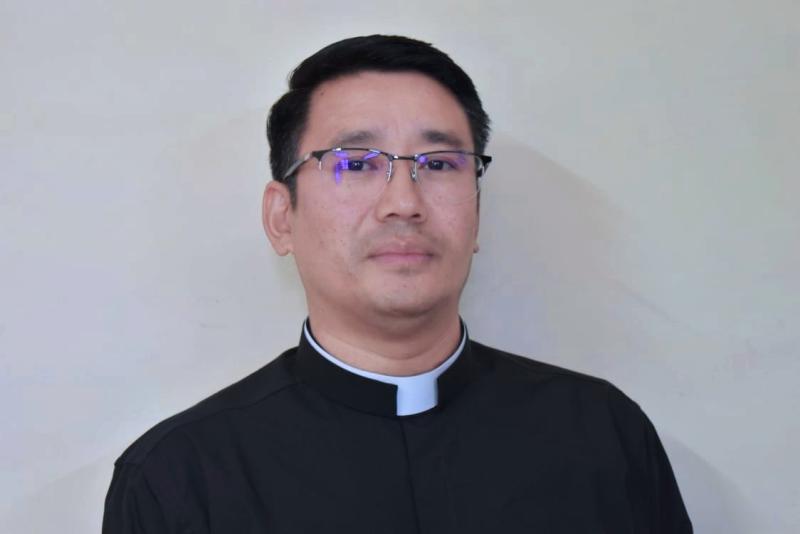
(The author is a priest of the Archdiocese of Imphal, presently holding the charge of Chancellor & Judicial Vicar)