
Articles
Rights to Christians is a Constitutional guarantee, not based on Service to Society
Opinion | Articles | John Dayal | 23-Nov-2026
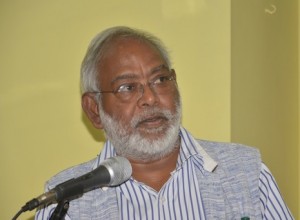
On behalf of the Christian community, I must thank Rajya Sabha member and senior editor Ms Sagarika Ghose for the fact-finding she led in West Bengal on the rising persecution of the people. It has put on record a good deal that the authorities would have preferred to leave unrecorded: the attacks on Christians, the refusal of burial grounds in states such as Chhattisgarh, the social boycotts, the intimidation, and the silence of the state wherever it chose to be silent.
I differ with her article in The Print on one point, which it shares with most friendly commentaries that follow such reports. They defend the Christian community by listing its schools, hospitals, literacy campaigns and care for the abandoned, and in doing so they accept the Sangh’s premise that rights are earned and that a community’s safety depends on its balance sheet with the nation. The claim of Indian Christians to security rests on citizenship, law and human dignity, and on nothing besides.
Indian Christians have no wish to strike a barter in which minority rights are a concession, extended for as long as the community remains useful, much as a household keeps a milch cow while it gives milk and a hen while it lays. Citizens cannot be governed on the principles of the farmyard, and certainly not in 2026.
We need not prove our innocence before we pray. The political or religious majority has no say in how another community practices its faith, and a citizen should not have to live as a tenant in his own country, one election away from notice to quit.
Any allegation of forced conversion calls for an impartial inquiry under the law and not for a raid by a mob, and a request for a burial ground is a question of equal citizenship which no neighborhood is entitled to grant or withhold as a favour.
The Constitution is explicit on all of this. Article 25 guarantees to every person freedom of conscience and the right to profess, practice and propagate religion, Article 14 promises equality before the law, Article 15 forbids discrimination on grounds of religion, and Articles 29 and 30 protect the cultural and educational rights of minorities. The text attaches no condition of satisfactory performance to any of them, gives none of them an expiry date, and makes none depend on a community’s contribution to national development. A Christian is not asked to demonstrate his usefulness, or his adherence to someone else’s code of nationalism, before he buries his dead, draws water from the village well or builds a church, and what the Constitution asks of the state is that it protect him as an equal.
The defence by contribution also carries a moral difficulty, because it quietly admits the reverse for if rights follow usefulness, they may be withdrawn when that usefulness is disputed, diminished or declared no longer necessary, and by then the community has agreed in advance to the terms on which it will be dismissed. The Preamble draws no distinction between the productive and the unproductive; it promises dignity to all, with fundamental rights as the foundation of equal membership of the republic.
Dr B.R. Ambedkar warned the Constituent Assembly that a majority which treats the security of minorities as a concession or a special gift places the whole democratic order at risk. He distinguished a political majority, which is formed by persuasion and programme and may dissolve at the next election, from a communal majority, which is fixed by birth and claims to speak for an entire faith.
The federal structure sharpens the point, since Part III binds the Union and every state government alike. A Christian in Bengal is therefore entitled to what a Christian in Kerala or Goa is entitled to, whatever the political complexion of the government in Kolkata or the temper of the local majority. Law and order is a state subject, which places the first duty of protecting a funeral or a prayer meeting on the state administration and its police, and neither the state nor the Union may plead that the failure belongs to the other. A union of states in which fundamental rights vary with the local majority soon becomes a collection of fiefdoms under a common flag.
Reports from Bengal show where this reasoning leads in practice. Christians form about 2.3 per cent of India’s population and under one per cent of Bengal’s, which makes them an easy target and no demographic threat to anyone. Accounts speak of burial rights denied, access to water restricted, families ostracized and vigilante groups intimidating congregations, and in one reported case a buried body was exhumed and forcibly cremated while the family was told that their government had come. The Religious Liberty Commission of the Evangelical Fellowship of India and the United Christian Forum recorded 127 incidents of violence against Christians in 2014 and 834 in 2024, a rise too large to be explained by local quarrels.
Burial deserves separate attention. A family that is refused the ground in which its people have been laid for generations is told, at the worst hour of its life and in front of the whole village, that it does not belong. The Supreme Court has read Article 21 as carrying human dignity beyond death, and the statutes protect the rites by which a community commemorates its dead. Burial grounds are also entered in municipal and revenue records, so a refusal is seldom a spontaneous act of the crowd and far more often a failure of the registrar, the revenue official or the panchayat to do what the law already requires of them. Where a Christian cemetery is missing or disputed, the state owes the community an allotment of land and a guarantee of safe passage for the funeral, and it owes both without waiting for the family to plead.
What is required of the state is not complicated, and it asks for no generosity.- police and an administration which understands that if they stand by while a grave is dug up, they have failed in their oath.
As a parliamentary reporter decades ago, I witnessed a very warm, not hot, debate in the Rajya Sabha. Members from all parties vigorously defended the rights of the tiny Onge population of Little Andaman, a small and isolated Particularly Vulnerable Tribal Group whose traditional economy barely registers in the statistics of development, and affirmed that the Onge have the same claim to life, liberty, freedom of conscience and equal protection as any other citizen. No person suggested that their modest contribution would justify their extinction or the suspension of their rights.
Praise for Christian schools and hospitals may be noted with courtesy, but the rights of Christians no more depend on those institutions than the rights of the Onge depend on the yield of their forest. Both rest on the Constitution and on the equal dignity of every person. Dr Ambedkar’s warning remains the plainest statement of the danger, and to heed it is to dismantle the transactional logic entirely, so that no community in India, Christian or otherwise, is ever asked to justify its existence by its usefulness to anyone.
(John Dayal is a former editor, member of the National Integration council, and former President, All India Catholic Union)