
Articles
The Man Who Never Stopped Building Bridges
Opinion | Articles | John S. Shilshi | 26-Nov-2026
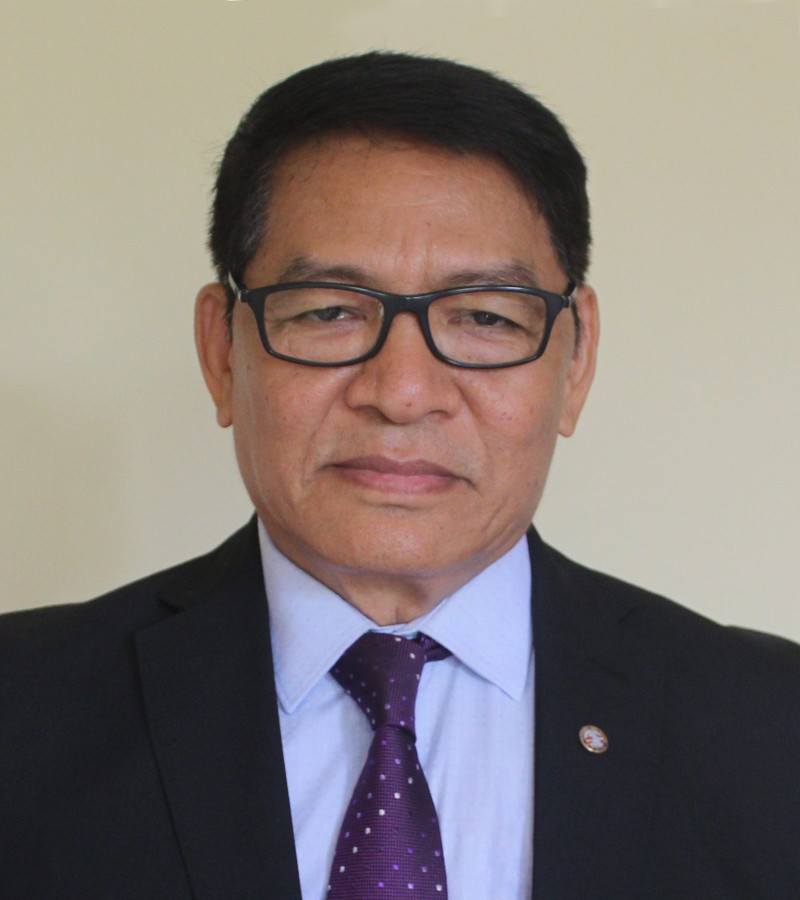
Archbishop Thomas Menamparampil's departure from this world did not come as a shocking surprise to us because we have been following developments concerning his health at the AIG Hospital in Hyderabad. Thanks to regular updates by the Archdiocese of Guwahati, we knew his medical parameters had not been particularly encouraging over the preceding few days. So, while we continued praying for his recovery, we also prayed that the Lord's will be done.
The reality confronted us on November 25, 2026, when news of his passing was finally made public. The mission of a satisfied man, who never stopped working even at the age of 90, had come to an end. It was, perhaps, a poignant coincidence that he breathed his last on the International Day for the Elimination of Violence against Women, a cause closely connected to the larger social concern for human dignity and peace, which he always believed were central to the well-being of any society.
Born to Mr Thomas Cheriyathu Menamparampil and Mrs Annamma at Kodapattoo, under the Pala Diocese of Kerala, he grew up in a traditional Malayalam household alongside eleven siblings. He began his education at St Thomas School before moving to Darjeeling for further studies and the pursuit of his religious vocation. He was ordained a priest of the Salesian Congregation on May 24, 1965. His intellectual curiosity and thirst for knowledge led him to earn master's degrees in History and English and held several important assignments in various Salesian institutions.,
In June 1981, Rev. Fr Thomas Menamparampil was appointed Bishop of Dibrugarh by Pope St John Paul II. He continued in that position until 1992, when he was transferred to Guwahati following the creation of a new diocese and remained its shepherd when the Diocese of Guwahati was subsequently elevated to an Archdiocese, serving until his retirement. In effect, Archbishop Thomas Menamparampil's association with the Northeast began as early as 1965, and the region remained his home and field of service for most of his life.
His family, too, was blessed with several religious vocations. Of the twelve siblings, two of his brothers also became priests: Rev. Fr Michael, a diocesan priest and Rev. Fr MC George, a priest of the Salesian congregation. All three brothers served outside their home state of Kerala. One of their sisters, Rev. Sr Sulata, fondly called Kunjheliamma at home, also embraced religious life as a nun. She belonged to the SNDP congregation.
Archbishop Thomas was an extraordinary personality who gave the very best of himself, particularly to the Northeast. Besides his commitment to education and social initiatives, he devoted considerable attention to peacebuilding, an area of immense importance in a region frequently troubled by conflicts. He worked closely with like-minded individuals from sister Churches and other religious communities. Wherever trouble erupted, he was willing to reach out. Kokrajhar, Churachandpur, Diphu, Haflong, Imphal; were among the places where his presence and peace initiatives were felt. He had the courage to engage with people caught in conflict, listen to their concerns and help transform tense situations into opportunities for dialogue.
When violence erupted in Manipur in 2023, he met several Meitei elders and intellectuals to seek their views and suggestions on how normalcy could be restored. His initiatives were warmly received by everyone. Given the complexity of the situation in Manipur, and the presence of elements that were not necessarily conducive to peace, the circumstances were particularly challenging. Nevertheless, he kept trying hard, though to no avail.
Dr Deben Bachaspatimayum, a Meitei gentleman who worked closely with Archbishop Thomas, recalled his last telephone conversation with him on November 19. Archbishop had told him:
“Deben, I am praying for Manipur. I am praying for you also every time. I want to be shot dead in Manipur in trying to make peace among the people there instead of wasting my time and money in a hospital in Hyderabad.”
I suspect these were sentiments he had expressed to several people in recent times. They reveal something profound about the man: even when confronted with his own mortality, his thoughts remained with people caught in conflict and his desire to bring them peace.
Rev. Fr John Minj, a dynamic priest from the Diocese of Dibrugarh who was baptised by Archbishop Thomas when he was a boy, sent me a moving tribute. He wrote:
“A candle has melted and ceased to illuminate thousands across the globe. It was a blessing I could listen to him on several occasions. His very presence poured forth a sweet and divine fragrance leading everyone to terrestrial as well as ontological realities. His joining the angels and Saints in heaven is the end of an era. His book, Attempt the Impossible, will always inspire generations. We were blessed by his presence here in the entire North East.”
Dr Vincent Darlong, who was very close to Archbishop Thomas and admired him immensely, recalled another enduring contribution of the Archbishop. “During the communal tensions in Tripura in 1980, he played a remarkably positive role by providing shelter to affected students from all the communities, saving lives and securing their future. It was an intervention that left a lasting impression on those who witnessed it”, he said.
Archbishop Linus Neli of Imphal offered another fitting tribute:
“Abp Thomas Menamparampil SDB, was a refined gentleman, scholarly writer, good pastor and leader. He had a keen sense of God, the Church, and humanity. His unique contribution to Northeast India is in building bridges, not walls; in promoting peace, not animosity.”
My own association with Archbishop Thomas began through appreciation of his scholarly writings, particularly his books and articles published in various journals and other publications. When the Covid-19 pandemic restricted personal interactions, email and WhatsApp became our principal means of communication. In 2022, when restrictions eased, I visited him to present two of my books.
I was struck by how productively he had used the difficult period of isolation. He had spent much of it writing books. His table was laden with books and journals, except the space in front of his very ordinary looking chair, where an Assamese traditional scarf lay neatly folded and spread. It was a simple setting, but one that reflected the intellectual life he had cultivated, the shelves and corners strewn with books that resembled the look of a library.
When the North East Catholic Research Forum decided to bring out a book on Northeast Christians' Contribution to Nation-building, a decision taken in his presence, some members felt that he should be requested to contribute one article. After a lengthy discussion, it was felt that given his advanced age, he should not be burdened with the responsibility. But when some scholars who had initially expressed willingness and assurance failed to deliver, we turned to him and requested a paper on peacebuilding. He readily agreed and, within a remarkably short time, emailed us the completed manuscript for editing.
I wrote back to thank him and requested his bank details so that we could transfer a token honorarium. His response was both touching and inspiring. He wrote:
“May I please be allowed the privilege of contributing the honorarium towards the printing of the book?”
I was deeply moved by this gesture. I conveyed his response to members of the Forum. It was a small but telling illustration of his generosity and the complete absence of any desire for personal reward. Even when offered an honorarium, his instinct was to give it back to a cause he believed in.
Even at 90, Archbishop Thomas remained physically active and mentally alert. In one of the chapters of his book, Values Must Come Alive, he made a strong case for a spirituality that responds to social needs. He wrote: “The right sort of Spirituality gives Secular Dimension its due.” How profoundly relevant those words remain, particularly in our present circumstances! For him, spirituality was never meant to be confined to personal devotion or religious observance. It had to find expression in compassion, service, justice and concern for fellow human beings.
He was also fearless in expressing his convictions. His writings reflected the courage of his thoughts, just as his public engagements reflected the courage of his convictions. Many will now be deprived of the immense wisdom, knowledge and insight that he so generously shared through his writings, lectures, conversations and speeches. Yet, his words and deeds will continue to guide those who believe in dialogue over confrontation, compassion over hostility, and bridge-building over division.
Archbishop Thomas Menamparampil has left behind much more than a distinguished ecclesiastical legacy. He has left behind an enduring example of how faith, scholarship and social commitment can come together in the service of humanity. The Northeast has lost a friend, the Church a distinguished shepherd, and the larger community a tireless advocate of peace.
May his Soul rest in peace
Visitor comments
Fr.Joy Pallikunnel
26-Nov-2026
Thanks for the good write up. He was colossal figure but so humble and kind.As he grew older his reflections were deep with experience and wisdom.His longing to be fully involved with people and their ability to live in good relationship of peace and harmony kept him always thinking of ways to reach it. At ninety he still kept fit but God wanted to give him rest and called him quietly home! May His work bear fruit in abundance of peace !!
Raphael D'Souza
26-Nov-2026
Excellent eulogy. Sentiments expressed by John Shilsi describes the man of God and the true Shepherd of his flock. May the soul of Archbishop Thomas Menamparampil Rest in Peace. Amen