
Articles
A Conspiracy to Disempower Christian Adivasis
Opinion | Articles | John Dayal | 16-Dec-2025
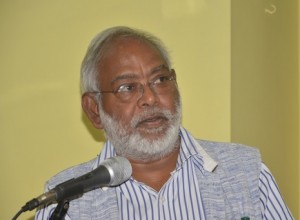
The organisers had instructions for speakers to not criticise the top political leaders, the government or the ruling party in the "National Christian Convention" at the New Delhi's Jantar Mantar protest site, but that did not stop Dalit and other speakers from articulating their angst, right under the noses of hordes of police personnel, some armed in battle gear, others in electronic cameras.
Among them was an Adivasi speaker who spoke something no one else had uttered from the convention stage – that across the forests and small towns of a belt that stretches from northern Gujarat and southern Rajasthan through much central and eastern parts of India, Adivasi Christians live today in a state of siege, an existential threat to their identity and their faith.
The conflicts that once centred on land, forests, and political autonomy in the face of corporate and political covetousness have widened into a battle over who counts as a "real" tribal person and on what terms. In village meetings, on hoardings, from political platforms, and now even from the Bench, they hear a new message: that a tribal accepting Christianity risks being treated as an outsider to their own people, and as someone who is stripped of constitutional protections and empowerment.
This is rubbing salt on the many cuts inflicted on the people over the decades. The Adivasis, which is how they prefer to be called, the old people, and not Vanvasis, as Hindutva protagonists want to limit them, in India's tribal belts of central, east and north east regions resisted domination by feudal satraps and colonial rulers, silently giving the country the spine and soul in its long freedom struggle.The Santhal, Gond, Munda, Oraon, Bhil, Naga, Mizo, and countless other peoples waged a relentless, often silent resistance against feudal satraps and colonial rulers. Often enough, the confrontation was violent, leaving some glorious martyr on the battlefield.
Birsa Munda raised the Munda-Ulgulan cry of "Abua Raj ete Jana, Maharani Raj tundu kana" (Let the kingdom of the queen be ended and our kingdom be established). Santhal blood tinted the soil of Jharkhand and Bengal in the 1855–56 rebellion, defying zamindari oppression and British land revenue systems. Tilka Manjhi, in 1784, became perhaps the first martyr, hanged from a banyan tree for shooting a British officer. The Bhils under Govind Gir rose in 1818; the Koyas of Godavari in 1845 and again in 1879–80; the Khonds of Odisha sacrificed colonial agents rather than surrender their forests.
Labelled as "tribal uprisings," they were wars for jal-jangal-zameen—water, forest, land—and for self-respect. Their ancient communitarian ethos, their refusal to bow before caste hierarchies or imperial decrees, infused the idea of India with an indigenous, egalitarian soul.
An acknowledgement of that and a tribute came when the committee under Babasaheb Dr B R Ambedkar was writing the new nation's Constitution; it linked their identity not to religion, as it did in the case of communities deemed untouchable under the Hindu Varna or Caste system, but to their land. An Adivasi, or Tribal as it was styled in English, could get statutory protection and privileges irrespective of the religion professed. The Adivasi could be a nature worshipper, a Christian, a Hindu or a Muslim, and no power in the world could touch his or her identity and status. The last 11 years seem to have radically altered the situation, rapidly introducing into theher identity and status. landscape what at best can be called the political agenda of the Rashtriya Swayamsevak Sangh's frontal groups, the Akhil Bhartiya Vanvasi Kalyan Ashram, and the educational Ekal school. Hate campaigns, confrontations, and violence followed.
In December 2022, fact-finding teams documented attacks in at least 33 villages across Narayanpur and Kondagaon districts, where Adivasi Christians were assaulted, their homes and prayer halls vandalised, and about 1,000 people driven out after being told to renounce Christianity or leave. Many camped outside the Narayanpur collectorate to seek protection. Other reports police stood by as Christians were beaten in villages such as Temrugaon, and initially refused to register complaints.
Around the same time, bodies of Adivasi Christians were exhumed from graveyards in Kondagaon and Kanker after objections from local leaders. In January 2025, the Supreme Court, hearing a burial dispute from Bastar, directed that a Dalit Christian pastor, Subhas Baghel, be buried in a distant Christian cemetery rather than in his village. Violence has spilt from homes and churches into the graveyard itself.
Over the past two years, Sangh groups such as the aggressively vocal Janjati Suraksha Manch have mounted rallies in central and eastern India demanding that Adivasis who convert to Christianity or Islam be "delisted" from the Scheduled Tribe category and stripped of reservations.
Tribal rights activists point out that this is plainly unconstitutional: neither the Constitution nor any law links tribal status to religion, and Article 342 defines Scheduled Tribes based on distinct culture, social marginalisation, and geography, not faith.
The demand has nevertheless moved from the fringes into Parliament. In July 2025, the Lok Sabha member from Udaipur, Mannalal Rawat, demanded in the House that converted tribals should be removed from the ST list, on the model of the 1950 Presidential Order that, in practice, confines Scheduled Caste status to Hindus, and now also to Sikhs, and Buddhists. His remarks echoed Janjati Suraksha Manch's rhetoric that "converted tribals" siphon scarce benefits from "genuine" Adivasis, an idea the RSS is testing "region to region" for political feasibility.
Scheduled Tribe recognition carries with it a bundle of protections painstakingly built over decades: reserved seats in elected bodies, quotas in education and public employment, restrictions on transfer of Adivasi land, and special procedures for forest diversion and mining in Adivasi areas. Groups such as the Meena agitated and won this title. Now their members dominate the tribal quota in central and state administrative and police services in Rajasthan and Madhya Pradesh, edging out groups such as the Oraon, Munda and Gonds.
To make those protections contingent on religious identity would be to introduce, for the first time, a doctrine of religious (Hindu) purity into the law on tribes. It would also overturn the settled position that, unlike Scheduled Castes, Scheduled Tribes may follow any religion and still be counted as STs.
On the ground, many Adivasi Christians already live as if religious tests for tribal status had informally come into force. This is much like how the anti-conversion laws enacted in 12 states are presumptuously invoked by both violent Sangh mobs, but often also by the police and civil officers.
In Bastar's villages, pastors and lay people describe panchayat meetings where they are told they can keep their Scheduled Tribe certificates only if they "return" to the traditional faith or to an undifferentiated Hinduism; some report threats that their forest-rights titles or caste certificates will be cancelled if they continue in the Church.
These warnings have no basis in law, but they are made credible by the way anti-conversion legislation is deployed. The Chhattisgarh Freedom of Religion Act, inherited from Madhya Pradesh and later strengthened, criminalises conversions by "force, allurement, or fraud," and the present government has spoken of an even more stringent law for tribal districts.
Patently, such provisions are used less to curb coercion than to harass pastors, disrupt prayer meetings, and intimidate anyone who considers changing faith. At the same time, mass "ghar wapsi" rituals to reconvert Christians or resolutions declaring villages "conversion-free" seldom attract official scrutiny.
Into this fraught climate came the recent judgment of the Chhattisgarh High Court on hoardings that bar the entry of pastors and "converted Christians" into eight villages of Kanker district. On 28 October 2025, a division bench held that these hoardings were "not unconstitutional," accepting the state's argument that they were precautionary steps by gram sabhas to protect indigenous culture and prevent forced conversions.
The Court invoked the Supreme Court's decision in Rev Stanislaus to reiterate that the right to propagate religion does not include a right to convert another person by inducement or coercion, and suggested that the hoardings were aimed only at outside pastors engaged in suspect activity.
For Adivasi Christians reading the text, the distinction is cold comfort. A signboard that says "No entry for pastors and converted Christians" does not explain constitutional niceties to a village crowd; it marks out a category of people who may be collectively refused entry. That the High Court chose to treat such hoardings as a valid exercise of local autonomy under the Panchayat (Extension to the Scheduled Areas) Act sends a clear signal: exclusion in the name of culture will be indulged so long as it is framed as a defence against conversion. The message to lower officials is obvious.
Where Christians are pushed out of village life, there is now a judicial precedent that can be cited in justification.
At the same time, the legal and administrative landscape around forests is shifting in ways that deepen Adivasi vulnerability. This writer has been travelling in this belt for half a century as a journalist. Much that been whispered is now visible.
The Forest (Conservation) Amendment Act, 2023, and the rules that followed it, narrow what counts as "forest," exempt several categories of projects from prior clearance, and, critics say, sideline gram sabhas and the Forest Rights Act of 2006 in decisions on diversion, making it easier to clear land for mining, infrastructure, and security installations without meaningful community consent.
The social logic of the present moment is therefore not hard to read. By suggesting that Christian Adivasis are cultural outsiders and potential law-breakers, majoritarian politics accomplishes several tasks at once. It delegitimises assertive claims to land and self-government under the Fifth Schedule, PESA, and the Forest Rights Act; it offers an explanation for persistent poverty that blames "missionaries" and "inducements" rather than the failure of state policy; and it draws some tribal leaders into demanding delisting themselves, deepening the sense of encirclement for Christians within their own communities.
The crisis facing Adivasi Christians is therefore not only about religious freedom, though that is clearly under strain. It is about constitutional personhood: whether a citizen may, by choosing a faith disapproved of by the local majority or a majoritarian ruler, be told that they have forfeited their right to their identity in all its wonderful layers.
Parliament has not amended the law on Scheduled Tribes. The Supreme Court has not endorsed the notion that tribal status can be lost by conversion. What exists, instead, is a growing gap between the Constitution's text and the lived experience of a small but vulnerable minority.
The political apparatus at present, the ruling Sangh ideology, and the fragmented Opposition lack the moral fibre and will to demand that the government enforce the law, police register and investigate violence against Christians, and courts implement both the letter and the spirit of the law in the face of the aggression of politically powerful elements.
(The author is a Sr. Journalist, Right activist, and spokesman of the All India Catholic Union. Views expressed in this article are personal)