
Articles
Kanpur Christians Set example for Christian unity in Trouble times
Opinion | Articles | Chhotebhai | 01-Feb-2026
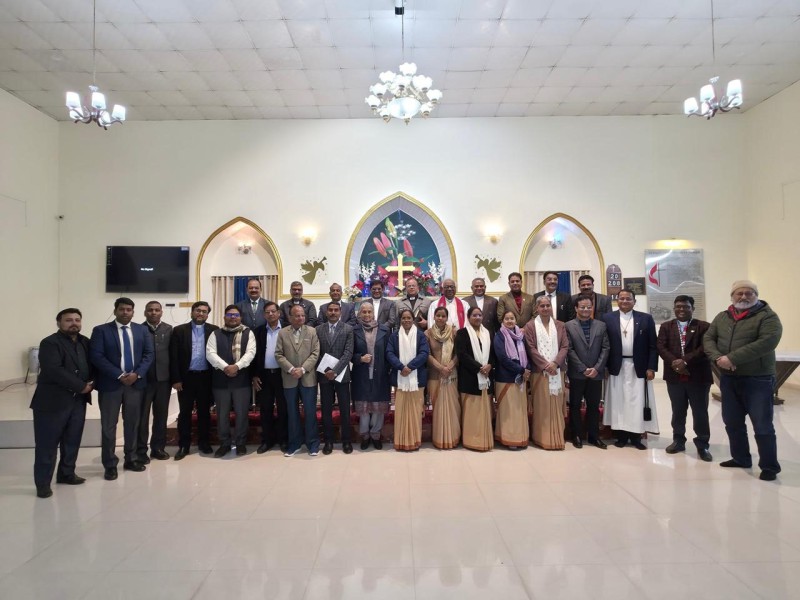
Representatives of different churches during 8-day Octave
The Christian community in Kanpur celebrated the Christian Unity Octave (CUO) from 18th to 26th January 2026 with devotion and dedication. For the first time all 8 days of the Octave were booked; three by Catholic churches, two each by the CNI and Methodist churches, and one independent church; hosted by Revs Antony K.K., Lancy D’Cunha, Rajesh Simon, Santosh Pande, Anil Prakash, Dr Rajan Dass, Wilson Victor and Samuel Singh respectively.
The modern-day ecumenical movement began by an American Anglican Franciscan friar, Paul Wattson in 1908. It has since been endorsed by both the Catholic Church and the World Council of Churches. From the Catholic side the prime motivation was organic unity, under the supremacy of the Pope. The only known instance is when Abp Mar Ivanios, with his followers, led a section of the Syro-Malankara Orthodox Church into full communion with the Catholic Church in 1930. Today it is known as the Syro-Malabar Rite within the Catholic Church. However, this approach to organic unity caused suspicion and even resentment among other churches.
With the passage of time the emphasis is now on unity of spirit and services; while respecting each others diversity, liturgical, historical and cultural heritage. This is healthy ecumenism.
The Nicene Creed of 325 was a binding force among Christians. But this became unbound with the Great Schism of the east in 1054. It took 911 years for the Catholic Church and the Eastern Orthodox Churches to revoke their mutual ex-communications in 1965 when Pope Paul VI and Greek Patriarch Athenagorus met.
For the Catholic Church the Second Vatican Council (1962-65) was a watershed moment for ecumenism. Its Decree on Ecumenism (Unitatis Redintegratio) has this to say: “Promoting the restoration of unity among all Christians is one of the chief concerns of the Second Vatican Council” (UR No 1). “The Catholic Church accepts them (other Christians) with respect and affection as brothers” (UR 9). So there is no condescending or big brother attitude. Further “Worship in common is not merely possible, but is recommended” (UR 15). In this spirit, very recently Pope Leo XIV travelled to Nicea, now called Iznik in Turkiye, to commemorate 1700 years of the unifying Nicean Creed and for fellowship with leaders of various Churches.
Because of the increasing attacks and threats to the Christian community in India, the theme of the Octave was “Love unites and strengthens”. It was important to read the signs of the times and the dark clouds gathering, as Jesus himself had warned (cf Mat 16:3).
We should not be overly alarmed by divisions and dissensions in the Church; they were prevalent even in apostolic times, causing Paul to lament “Brothers it is clear that there are serious differences among you. What I mean is this, every one of you is declaring – I belong to Paul, or I belong to Appolos, or I belong to Cephas, or I belong to Christ. Has Christ been split up?” (1 Cor 1:11-13) Hence we need a rational and practical approach to overcome dissension.
We need to distinguish between unity and uniformity. Uniformity is what the present Govt wants – Uniform Civil Code, One Nation One Election, One District One Product etc. However, India is a country that has lived and grown with unity in diversity. This should also be the guiding principle in ecumenism – mutual respect, including of differences.
The Creator knowingly made us different. No two humans have the same thumb impression or the iris of the eye. Dare man to better that? The five fingers of the hand are also different, but when we gather them together as a fist, it assumes formidable strength. So too is unity in diversity.
Every service included the Nicean Creed and the Lord’s Prayer and intercessions for different intentions like – Unity in the Local Church, concern for persecuted Christians, harmony among religions and for youth, the future of the Church. A passage that was read in most of the services was from Ephesians 4:1-6, on the importance of unity.
On the last day of the Octave the congregation took a pledge for unity and also signed a Memorandum addressed to the Central and State Governments asking for an end to the violence and hate mongering against the Christian community that had peaked at Christmas 2025.
The only major Church that did not participate in the CUO, despite repeated reminders, was the Syrian Orthodox Church, for reasons best known to itself.
The Organising Committee, comprising of Revs Jitendra Singh (New India Church of God), Santosh Pandey (CNI), Nitin Lal (Methodist), Lancy D’Cunha (Catholic) with the Co-ordinator, chhotebhai, would first evaluate the Octave and then call a general meeting to plan for the future.
It remains to be seen if this unity has been forged of necessity or conviction. Judging by the level of enthusiasm and collaboration during the CUO it is hoped and prayed that this unity is enduring.
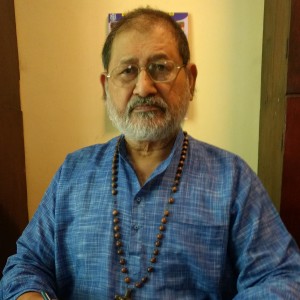
(The writer is the Convenor of the Indian Catholic Forum)