
Editorial
Stooping Beyond a Limit
Opinion | Editorial | John S. Shilshi | 04-Feb-2026
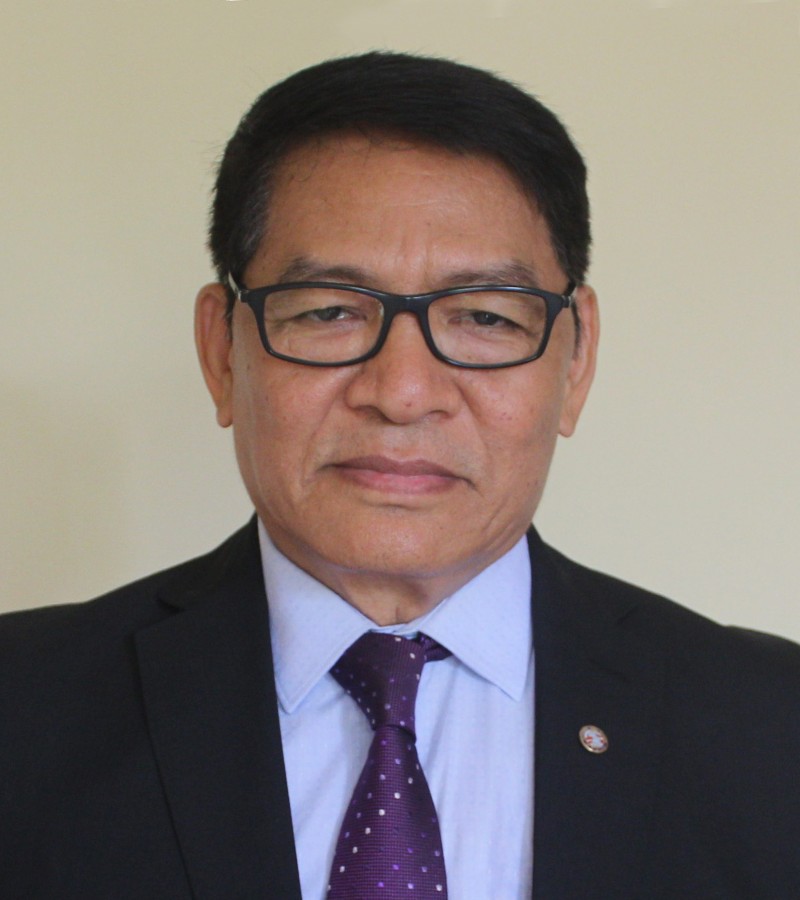
When Himanta Biswa Sarma exited his parent party, the Indian National Congress, in 2015 and joined the Bharatiya Janata Party, not too many eyebrows were raised since such leapfrogging from one political party to the other was nothing new in Indian political circle. However, when he fast emerged as the strong man of his party in the Northeast region, many people, including those not politically sensitive but neutral analysts, saw the rise as a welcome change, not because they had a preference for the BJP, but as an opportunity for the region to assert itself in the national scheme of things, which the grand old party never allowed in the number of years they were in power.
When he dislodged his own party member Sonowal and became the Chief Minister of Assam in 2021, the expectations within and beyond Assam grew even more because he was seen as someone who is outspoken, assertive, and a go-getter in comparison to his predecessor, who liked to do his job quietly without much publicity and fanfare, a quality considered to be a minus in Indian political circles. Five years down the line, the expectations of the people of the Northeast region are dashed. As the Chief Minister of the region’s biggest state, Himanta Biswa Sarma actually had failed to speak up on some burning issues in the region, such as peace in Manipur and delayed Naga peace talks. Within Assam, he is suspected to be the brain behind the attempt to sell out tribal land in Kokrajhar district to facilitate Adani setting up a thermal project on over 3600 bighas of land.
On the communal front, Assam has never been known for disturbances along religious lines, even during the peak of the ULFA insurgency. As a big brother in the region, the state has always set an example for the rest in maintaining an impeccable record of harmonious coexistence, barring a few instances of ethnic confrontations. All these became history after Himanta Biswa Sarma took over as the Chief Minister of Assam. Smaller religious groups, particularly the Muslims and Christians, felt the heat of his Yogi-style of functioning. Within Assam and beyond, people believe that the NRC was taken up in earnest to remove Muslim names, only to be halted halfway when it became evident that continuing with the exercise would have impacted the Hindu community more than it would have affected the Muslims. CAA, too, is believed to have been intended to favour the majority community while marginalising the others.
Under his leadership, the government of Assam also enacted the Assam Healing (Prevention of Evil) Practices Act, 2024, legislation that the Christian community perceived as intended to curtail their religious activities, including offering prayers for the sick. Besides, the Christians feel threatened because, for the first time in many years, organisations like the Kutumba Surakshya Parishad (KSP) and the Bajrang Dal have become fearlessly arrogant in targeting priests and nuns. They were threatened with dire consequences if they showed up in schools and colleges in their religious costumes. A nun who was traveling in a bus between Goalpara and Dhudnoi was offloaded by the conductor after she was jeered and mocked for her faith and her dress, unmindful of the helpless woman’s safety and security. In the first of its kind, a Christmas crib was destroyed and desecrated by the Bajrang Dal members in Nalbari district in December 2025.
While Assam shining in terms of infrastructure development under Himanta Biswa Sarma cannot be denied and shall be acknowledged as an epochal era, social harmony in the state of Assam having slipped to an ebb cannot be ignored either. His recent pointed statement targeting the Bengali-speaking Muslims who migrated from Bangladesh over the last century was deplorable for a man of his stature. His implicit directive to the common men to harass the ‘Miyas,’ by paying Rs.4 instead of 5 to rickshaw pullers in order to slowly edge them away from the Assam land, was incomprehensible, disgusting, and condemnable. Even for an ordinary person, lowering oneself to such indignity would have been shameful, let alone for a top executive of the state. In his defence, the Chief Minister says he has to safeguard the interest of the Assamese people. But as a matter of fact, these migrants did not come in recent times but over a period of time, including during the period when he was one of the powerful men of the Indian National Congress. More importantly, as the Chief Minister of a state, is he not a father figure to every citizen of Assam irrespective of their community, caste, creed, or religion?
Assam has always been one of the states of the Indian union that showcases a clean communal image, even in the aftermath of the Babri Masjid demolition, when most states with mixed populations had to grapple with communal tension. Reclaiming that enviable reputation must be the crying need of the hour. Also, if Shining Assam has to go a full circle and benefit every section of the society, the leadership must recognise the imperatives of investing in goodwill and social harmony rather than trying to divide people along communal lines. It needs reminding that for Himanta, there could be no better sustaining ground to exhibit his dynamism and political prowess than a peaceful and inclusive Assam.