
Articles
History of Lakhuti Catholic Church: 1951 to 2026 (75th Anniversary Jubilee
Opinion | Articles | Abraham Lotha | 05-Jan-2026
The story of the Catholic Church in Lakhuti evolved from “dhorum khicho” (took religion) to “Catholic dhorum hansi yicho” (brought Catholic religion) to “Catholic kümcho” (became Catholic). This unfolded at the confluence of British colonial expansion in Assam, the evangelistic fervor of Baptist and Catholic missionaries, and the Lotha Nagas' spirit of commerce and relationships with their neighbors in Assam.
During colonial times, Western colonials and missionaries perceived indigenous communities like the Nagas as ‘pagans’ or ‘animistic’ without religion, even though their everyday lives revolved around many religious beliefs. Christianity was an institutionalized religion; Naga tribal religion was not. In the Naga Hills, becoming a Christian was often referred to by the Lotha Nagas as dhorum ekhi (to accept religion).
Nagas lived in their self-governing village republics, but with the arrival of the British, some Naga tribes including the Lothas came under the British rule. These Naga areas were placed under a new administrative unit in Assam called Naga Hills District, which continued even after the independence of India. In 1957, the Naga Hills District and the Tuensang Area were merged to form the Naga Hills-Tuensang Area (NHTA), and this administrative unit formally became the Indian state of Nagaland on December 1, 1963.
During the period when the Naga Hills District was part of Assam, the Lothas were aware of some of the Catholic communities and missionaries in Assam. This was before the team of Spanish Sisters and Msgr. Emmanuel Bars, SDB came to serve at the newly established Civil Hospital in Kohima on December 31, 1948.
The Lothas had trade relations with their neighboring communities in the Assam plains before the arrival of the British in the 19th century. Trades flourished at special markets known as Naga khats, such as Nagabat at Borholla, close to the Lotha area. Social and commercial relationships were formed at these border trades. The Lothas went to these neighboring border markets and towns like Golaghat and beyond for yentsalo (journey) and yantsolo (for feeding) to procure essential commodities. In the process they also came to know about the Catholic community of Gorajan (established in 1933) and missionaries in Golaghat. In this regard, the people of Lakhuti say they brought the Catholic faith from Assam (Catholic dhorum khi hansi yicho).
The British East India Company and later private companies established the first commercial tea gardens in Assam during the colonial era, beginning in the mid-19th century. From the 1840s onward, the British transported Adivasis from Chotanagpur area of India to Assam to work as labourers in these tea gardens. At a later stage, some of these labourers had already been baptized by the Catholic missionaries in Chotanagpur. After their contracts ended, many Adivasi laborers and their descendants, including Catholic converts, left the tea gardens, took up land, and started villages outside them, especially in the North Lakhimpur and Sibsagar districts, including the Catholic community of Gorajan which was established in 1933 in close proximity to the Lotha villages.
Catholic mission work among the Adivasis in Assam began in 1906 by Fr. Rudolf Fontaine, a Salvatorian missionary. The Golaghat Catholic mission began on 24th August, 1941 by Fr. Peter Jean Neyens SDB, which until then had been part of the parish of Dibrugarh. Fr. Neyens worked tirelessly and by January 1942, his work covered 95 Catholic communities, serving a population of 6,878 Catholics. On 12th July 1951, the diocese of Dibrugarh was carved out from the Diocese of Shillong-Gauhati with Bishop Orestes Marengo appointed as its first bishop.
The Catholic Church in Assam became a springboard for the beginning of the church in the Lotha area. According to Bishop Marengo, “Our plain Christians must be happy to have served as spring board for our venture among the hill-tribes of Nagaland and Manipur. It is from them that the message and the light of the Gospel has [sic] spread to the many Mongolian tribes that make up the promising diocese of Kohima-Imphal, the daughter of the Dibrugarh diocese” (Dibrugarh Diocese Silver Jubilee Souvenir). Fr. Felix Bollini, who came to Golaghat on 6th December 1946, described the spread of the faith as follows: "The news of our presence in the plains, reached the Naga hills too.” He recalled a surprise visit on December 28th, 1950, by five Lothas from Lakhuti, who invited him to visit their village" (Golaghat Golden Jubilee Souvenir).
Meanwhile, sometime in 1949, the Lotha Baptist Church Council directed all the churches in the Lotha area to increase the pastor’s monthly salary by ₹ 2.50. A dispute arose within the Baptist church in Lakhuti with some in favor and others against this directive. As a result, the following three prominent members who were in favor of increasing the pastor’s salary were expelled from the church: Shanpano Humtsoe, Yantsao Yanthan, and Chenisao Humtsoe. The decision to expel them was published in the Baptist newsletter, Ntsitav Yi, Lotha Khristian Yithen, October 1950. Despite their numerous appeals, they were denied membership again in the Baptist church.
The expelled members, still wanting to remain Christians, made inquiries about the Catholic faith. They were helped in this endeavour by a fellow villager, Rhansümo Humtsoe, who had earlier worked in Dibrugarh as a helper for an Anglican Bishop and Fr. L. Piasecki. Rhansümo advised those expelled saying, “If you want to remain a Christian, you can join the Catholic Church.” He directed them to meet with their neighboring Catholics in Gorajan and the missionaries in Golaghat. These members met with Fr. Bollini on December 28, 1950, and they spent that night and the next day learning about the Catholic faith.
On April 2, 1951, the three families held a prayer service in Lakhuti to discern if they should become Catholics. On April 4, 1951, they made a decision to become Catholics and sealed their pledge with their thumbprint. On April 7, 1951, Shanpano Humtsoe and Yantsao Yanthan went up to Wokha and met with Mhondamo Kithan (Lotha Tribal President), Nchemo Kinghen (Lotha Bench Court Chairman), and Rev. Howard Huston (the American Baptist missionary in Vankhosung) to seek a no-objection clearance from them in order to become Catholics. The three leaders assured them that everyone was free to practice their religion under Indian law. The decision was theirs to make. With this assurance, they returned to Lakhuti on April 9, 1951.
The following day, on April 10, they went down to meet with the Catholic community in Gorajan in neighboring Assam and spent the night learning more about the Catholic faith. The next day, on April 11, along with the Catechist from Gorajan, they went to meet Fr. Bollini in Golaghat who was then the Parish Priest. They spent the night being instructed in the Catholic faith by Fr. Bollini and they next day, April 12, 1951, they were received into the Catholic faith, thus becoming the first Catholic community in Nagaland.
Upon their return to Lakhuti, they established the Catholic community in their village. The three families had a combined total of 21 members at that time. Even though some of them were not yet baptized or received into the Catholic Church at that point in time, they were Catholics by desire – a desire to live according to Catholic teachings, even if they were not yet formally a member.
From April 15th onward, the small group of Catholics, helped by the non-Christians, began to gather materials for the construction of a church in Lakhuti. Upon completion, Catholic services were held in this church from May 1, 1951. What began with three Catholic families in 1951 has now grown to 208 families in the village and over 700 families in various parts of Nagaland and around the world.
From April 1951, when the Catholic community in Lakhuti was established, it was under the jurisdiction of the Shillong diocese until July 12, 1951, when the diocese of Dibrugarh was erected, which then included Lakhuti village. When the Diocese of Kohima was created in 1973, the Catholic community of Lakhuti came under its jurisdiction. Nagaland, where the community is located, had formally become a state in the Indian Union on December 1, 1963.
The Catholics in Lakhuti know their history well and are proud that they belong to the church founded by Jesus Christ. Even though they were initially discriminated against due to anti-Catholic prejudices, the Catholic Church has transformed its Lotha Catholics from diffidence into confident members of the one Holy, Catholic and Apostolic Church, and from an oppressed local identity into a shared global one. Their solidarity with more than 1.4 billion Catholics in the world strengthens their identity.
Catholics and Baptists in Lakhuti village have become more tolerant and open-minded towards each other's beliefs; both communities help out each other on important occasions and times of need, in contrast to many parts of Naga society where anti-Catholic prejudices are still prevalent.
The Catholic church has played a major role in the integral human development of the Lakhuti people. The saying, “Give a man a fish, and you feed him for a day. Teach a man to fish, and you feed him for a lifetime” is so true for what the Catholic Church has done for the people of Lakhuti. The Catholic Church has a long history of establishing schools globally, and this is also true for the Lotha area. Education has helped the Lothas to think for themselves which has helped strengthen their identity. By integrating faith with education, the Catholic Church gave people the tools and skills to navigate the complexities of the modern world. The presence of many educated employees from Lakhuti and the nearby villages, including many in leadership positions in the broader Naga society, attests to this.
From May 1, 1951, the newly converted Catholics worshipped in a church with a thatched roof, constructed with the help of the local non-Christian population. The present church, inaugurated on April 24, 1960 by Bishop Marengo, was constructed by Fr. John Larrea with the help of the Catholic community members, or as the people would say, “Fr. Larrea na e tssóyicho” (Fr. Larrea built the church for us). A new church will be blessed and inaugurated during the 75 years Jublilee from 16th to 18th January 2026. In terms of ecclesiology, the construction of the new locally funded church is a growing sign of maturity and community strength.
The Lakhuti Catholic Church's 75th Anniversary Jubilee is a celebration of harishi, which signifies God’s blessings of a harmonious and prosperous life for the people of Lakhuti.
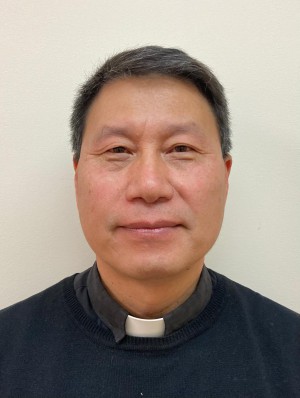
(The author is a Catholic priest, an anthropologist, and an author from Lakhuti, Nagaland. He is also the President of the Lotha Academy, the organisation that looks after the language development of the Lotha Nagas)
Visitor comments
Maga yattu
20-Jun-2026
Thank you for this well-written and informative article. It greatly helped me in understanding the history of the Catholic Mission among the Lothas and was very useful for my assignment. Congratulations on the 75th Jubilee of Lakhuti Catholic Church. God bless the Church and the community. ????❤️
Honjah
15-Sep-2026
As stated in the 9th paragraph, those expelled members were in favour of monthly increament or against the increment? Para quotation, "Meanwhile, sometime in 1949, the Lotha Baptist Church Council directed all the churches in the Lotha area to increase the pastor’s monthly salary by ₹ 2.50. A dispute arose within the Baptist church in Lakhuti with some in favor and others against this directive. As a result, the following three prominent members who were in favor of increasing the pastor’s salary were expelled from the church" Thankyou, And looking forward towards your esteemed response.